

Printed Mono Cartons: How to Choose the Right Packaging for Your Product
Packaging is often the first physical interaction a customer has with a product. Before they read the product details or experience what is inside, they notice the box, its design, colors, and overall presentation.
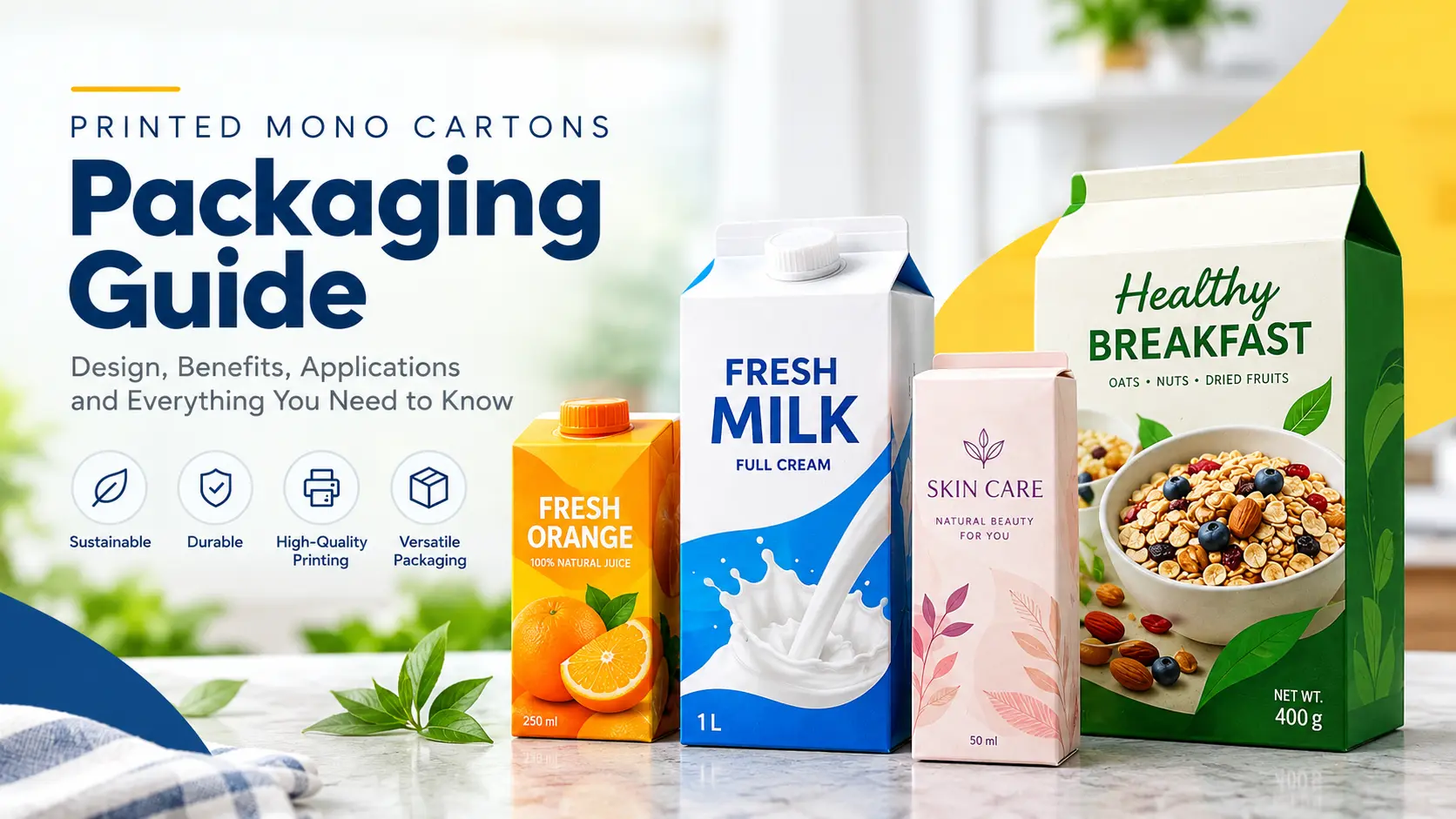
This is why choosing the right packaging is an important decision for brands. Printed mono cartons are a popular packaging solution across industries because they combine product protection, branding, product information, and shelf appeal in one compact format.
From pharmaceuticals and cosmetics to food and electronics, high-quality printed mono cartons can be designed to meet a wide range of packaging requirements.
However, selecting the right carton is about more than choosing an attractive design. The board material, printing quality, carton structure, finishing, product size, and intended application all need to work together.
What Are Printed Mono Cartons?
Printed mono cartons are folding cartons generally made from paperboard and printed with product information, branding, graphics, and other required details.
Unlike plain packaging, custom printed mono cartons give brands a direct opportunity to communicate with customers right from the retail shelf.
Depending on the product and application, a mono carton may include:
- Brand name and logo
- Product information
- Usage instructions
- Ingredients or specifications
- Barcodes and QR codes
- Regulatory information
- Manufacturing and expiry details
- Promotional graphics
The carton can also be enhanced with different printing and finishing techniques to create a more distinctive appearance.
Why Are Mono Cartons Popular?
One of the biggest advantages of printed mono cartons is their versatility.
They can be produced in different sizes, shapes, board grades, and designs to suit individual products. At the same time, they provide a relatively lightweight packaging solution that can be efficiently stored, transported, and displayed.
For brands, the carton also serves as an important communication and marketing tool.
A well-designed package can help a product stand out on a crowded shelf and create a more consistent brand identity.
Key Factors to Consider When Choosing Mono Cartons
Choosing the right packaging requires looking beyond the artwork. Here are some important factors to consider.
1. Choose the Right Paperboard
The board is the foundation of the carton. Its thickness, stiffness, surface quality, and strength can affect both the appearance and performance of the finished package.
The appropriate board depends on factors such as:
- Product weight
- Carton dimensions
- Required strength
- Folding and handling requirements
- Printing quality
- Storage and transportation conditions
A lightweight product may not require the same board specification as a heavier or more demanding application.
The goal is to select a board that provides adequate performance without unnecessarily increasing material usage or cost.
2. Consider the Product You Are Packaging
The carton should be designed around the product, not the other way around.
Consider the product’s shape, dimensions, weight, fragility, and how it will be placed inside the carton.
For some products, an insert or internal support may be required to prevent movement during transportation. For others, a simple folding carton may be sufficient.
A properly designed carton should hold the product securely while still being easy to open and handle.
3. Focus on Print Quality

Printing is one of the most visible elements of a mono carton.
Colors, images, text, and brand elements should be reproduced consistently across production batches. Clear text and accurate color reproduction are particularly important when the packaging contains technical, regulatory, or product information.
The choice of printing technology should depend on factors such as order quantity, artwork complexity, color requirements, and production specifications.
Printing Options for Mono Cartons
Different printing methods can be considered depending on the project.
Offset Printing
Offset printing is widely used for high-quality carton production and is particularly suitable for detailed graphics, images, and consistent color reproduction.
Digital Printing
Digital printing can be useful for shorter production runs, variable data, customized designs, and projects where flexibility is important.
Flexographic Printing
Flexographic printing may be suitable for specific packaging applications and larger-volume production requirements, depending on the carton material and desired output.
The right printing method depends on the project’s volume, design, quality expectations, and budget.
4. Select the Right Finishing
Finishing can significantly influence how a mono carton looks and feels.
Common finishing options include:
- Matte or gloss coating
- UV coating
- Lamination
- Spot UV
- Embossing
- Debossing
- Foil stamping
For example, a premium cosmetic product may benefit from foil stamping or embossing, while a pharmaceutical carton may prioritize readability and a clean, professional appearance.
The best finishing option should support the product’s positioning rather than simply adding decorative elements.
5. Pay Attention to Carton Structure
A visually attractive carton still needs to function properly.
The carton structure should consider how the box will be folded, glued, packed, transported, displayed, and opened.
Important structural considerations include:
- Panel dimensions
- Folding lines
- Flap design
- Locking mechanism
- Glue areas
- Product fit
- Ease of assembly
For automated packaging lines, dimensional consistency and structural accuracy become even more important.
6. Think About Product Protection
Packaging has a practical job: protecting the product.
The carton should help protect the contents from handling damage, dust, light, and other relevant external conditions, depending on the product.
For fragile products, additional internal packaging may be required. For pharmaceutical or sensitive products, the packaging design may also need to accommodate specific regulatory and product protection requirements.
7. Make Room for Important Information
Packaging often has limited space, but there can be a lot of information to communicate.
Depending on the product category, the carton may need to include:
- Product description
- Ingredients
- Directions for use
- Warnings
- Manufacturer details
- Batch information
- MRP or pricing information
- Barcode
- QR code
- Regulatory information
The design should organize this information clearly without making the packaging look overcrowded.
8. Consider Sustainability
Sustainability is becoming an increasingly important consideration in packaging decisions.
Paperboard-based mono cartons can be a practical option for brands looking to reduce reliance on certain plastic packaging formats. However, sustainability depends on the complete packaging construction, including board selection, coatings, inks, finishes, and overall material usage.
Using the appropriate amount of material and avoiding unnecessary packaging can also contribute to a more efficient packaging solution.
9. Choose an Experienced Mono Carton Manufacturer
The quality of the final carton depends heavily on the capabilities of the manufacturing partner.
When evaluating a supplier, consider their experience with:
- Paperboard selection
- Structural carton design
- Printing
- Finishing
- Die-cutting
- Folding and gluing
- Quality control
- Production capacity
- Artwork and prepress
- Packaging specifications
It is also useful to review samples before placing a large production order. Samples can help you evaluate print quality, board stiffness, finishing, folding accuracy, and overall appearance.
How Printed Mono Cartons Help Build a Brand
A mono carton is more than a protective outer package. It is an extension of the brand.
The combination of color, typography, graphics, structure, and finishing can influence how customers perceive a product.
For premium products, the packaging may communicate sophistication and quality. For everyday consumer products, it may focus on clarity, convenience, and shelf visibility.
This makes packaging design an important part of the overall customer experience.
Conclusion
Choosing the right printed mono cartons requires a balance between appearance, functionality, protection, cost, and production requirements.
The right carton should fit the product properly, protect its contents, communicate important information clearly, and represent the brand effectively.
Before finalizing your packaging, consider the paperboard, carton structure, printing method, and finishing. Partner with an experienced team through mono carton manufacturing services to guide you from initial artwork to full production.
Most importantly, work with a packaging manufacturer that can support you from artwork and structural development through printing, finishing, and final production.
A well-planned mono carton does more than hold a product. It can protect the product, communicate its value, and create a stronger first impression with the customer.
For more insights into the Indian label and packaging industry, read about Ugar Labels’ growth and packaging innovations.
