

Essential Label Printing Finishes That Enhance Product Packaging Appeal
Product packaging plays an important role in how customers recognize and perceive a brand. While packaging materials, colours, and graphics attract attention, the finishing touches can make a significant difference in the final appearance.
Label printing finishes help transform ordinary product labels into attractive, functional, and professional packaging elements. Whether it’s a glossy surface, an elegant matte texture, or metallic detailing, the right finish can communicate a brand’s personality and improve the overall presentation.
However, choosing a label finish involves more than visual appeal. Durability, packaging materials, product handling, and budget also influence the decision.
In this guide, we’ll explore popular label finishing techniques, their benefits, and how businesses can select the most suitable option for their products.
What Are Label Printing Finishes?
Label printing finishes are treatments or decorative effects applied during or after printing to improve a label’s appearance, surface properties, or durability.
Some finishes create a smooth, reflective surface, while others add texture, metallic effects, or selective visual highlights.
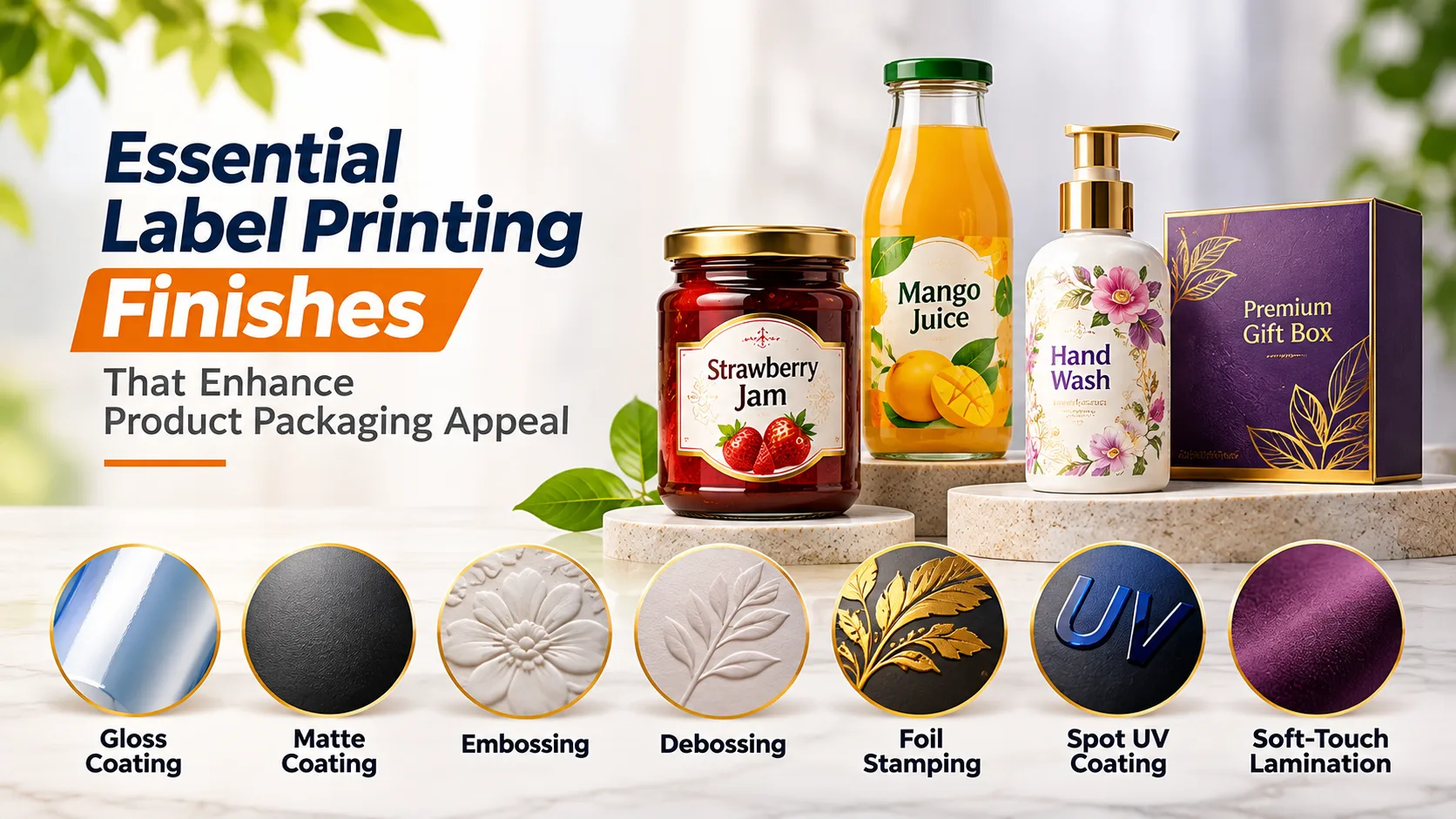
Common finishing options include gloss and matte coatings, lamination, foil stamping, embossing, debossing, and Spot UV.
The right combination depends on the label material, printing process, packaging application, and desired brand presentation.
Why Label Printing Finishes Matter for Product Packaging
Customers often notice packaging before they learn about the product itself. A thoughtfully finished label can create a positive first impression and support brand recognition.
Label finishing can offer several advantages:
- Improved shelf appeal: Attractive surfaces and details help products stand out.
- Better brand presentation: Finishes can reinforce a premium, natural, modern, or minimalist identity.
- Additional protection: Suitable coatings and laminates can improve resistance to scuffing and moisture.
- Enhanced customer experience: Textured and decorative effects can make packaging more engaging.
- Consistent appearance: Well-controlled finishing helps maintain a uniform look across production batches.
However, not every finish provides the same level of protection, and some are primarily decorative.
Essential Types of Label Printing Finishes
1. Gloss Finish
A gloss finish creates a smooth, reflective surface that can make printed colours appear vibrant.
It is commonly used for food packaging, beverages, cosmetics, and household products.
Gloss coatings or laminates can improve visual brightness and may provide additional surface protection, depending on their construction. Brands looking for colourful, energetic packaging often prefer this finish.
2. Matte Finish
Matte finishes create a soft, non-reflective appearance that can communicate simplicity and sophistication.
They are popular for premium cosmetics, personal care products, specialty foods, and minimalist packaging.
Matte surfaces can also reduce glare, making certain printed details easier to view under bright lighting. However, resistance to fingerprints and scuffing varies by material and coating formulation.
3. Foil Stamping
Foil stamping adds metallic or decorative effects to selected areas of a label.
Gold, silver, and other metallic finishes are often used to highlight brand names, logos, or design elements.
This technique is commonly associated with premium packaging, gift products, beauty brands, and specialty beverages. Foil stamping can create strong visual contrast without requiring the entire label to have a metallic appearance.
4. Embossing
Embossing creates raised elements on a label, adding depth and a tactile experience.
Brands may use embossing to emphasize logos, patterns, or decorative details.
It is especially effective when combined with simple layouts that allow the raised elements to stand out. Embossing suitability depends on the label substrate, thickness, and production method.
5. Debossing
Debossing produces an indented design rather than a raised surface.
This creates a subtle effect that can work well with elegant typography and understated branding.
It is often considered for specialty labels and premium packaging applications. Like embossing, debossing requires compatible materials and appropriate tooling.
6. Spot UV Coating
Spot UV is used to apply a glossy coating to selected areas of a printed design.
For example, a brand may highlight its logo or product name while keeping the surrounding label matte.
This contrast can create a distinctive visual effect. Spot UV performance and feasibility depend on the printing process, substrate, and coating compatibility.
7. Soft-Touch Lamination
Soft-touch lamination gives labels a smooth, velvety feel.
It can help create a refined packaging experience for luxury cosmetics, premium personal care products, and specialty retail goods.
The tactile effect encourages customers to engage with the packaging. Before selecting this option, businesses should evaluate scuff resistance, handling requirements, and cost.
8. Textured and Holographic Finishes
Textured finishes introduce distinctive surface effects that can complement natural, handcrafted, or premium brand positioning.
Holographic finishes create changing colours and reflective patterns when viewed from different angles.
These effects can make selected packaging designs visually distinctive. However, they should be used carefully to maintain readability and avoid distracting from essential product information.
How to Choose the Right Label Printing Finish
Selecting the ideal finish requires balancing aesthetics with practical packaging requirements.
- Understand your brand identity: Premium brands may prefer matte, foil, or embossed details, while colourful consumer products may benefit from gloss.
- Consider the packaging surface: Glass, plastic, metal, and paper-based packaging may require different label constructions.
- Evaluate product conditions: Refrigeration, moisture, handling, and transportation can influence finish durability.
- Protect important information: Ingredients, instructions, barcodes, and QR codes must remain readable. Follow the GS1 India barcode standards and guidelines to understand barcode quality and identification requirements.
- Review production costs: Decorative processes may involve additional materials, tooling, or production steps.
- Request samples: Testing finished labels on actual packaging helps confirm appearance, adhesion, and durability.
The best finish is one that supports both brand presentation and product functionality.
Common Label Finishing Mistakes to Avoid
Businesses sometimes select finishes based entirely on appearance.
Excessive gloss can create unwanted reflections, while decorative effects may interfere with small text or barcode readability.
Using an unsuitable coating can also result in scratches, scuffing, or premature wear.
Another common mistake is combining too many effects in one design, making the packaging appear crowded. A balanced design generally creates a clearer and more professional impression.
Explore Label Printing Solutions with Ugar Labels
At Ugar Labels, we understand that product labels contribute to brand presentation, packaging performance, and customer experience.
Choosing suitable label materials, printing methods, and finishing options is essential for achieving consistent results.
Whether your business is developing new packaging or improving an existing label design, our team can discuss your labelling requirements and help you explore appropriate solutions.
Explore our self-adhesive label printing solutions to learn more about available materials and finishing options.
Looking to Enhance Your Product Packaging?
Get in touch with Ugar Labels to discuss your custom label printing and packaging requirements.
Website: www.vikramprinters.com
Email: sales@ugarlabels.com
Contact: Contact Ugar Labels
Conclusion
The right label printing finishes can make product packaging more attractive, distinctive, and functional.
From glossy and matte surfaces to foil stamping, embossing, and Spot UV, each technique offers different visual and practical benefits.
By considering brand identity, packaging conditions, durability, and budget, businesses can choose finishes that improve product presentation while maintaining reliable label performance.
